Understanding Scoliosis, Diagnosis & Treatment
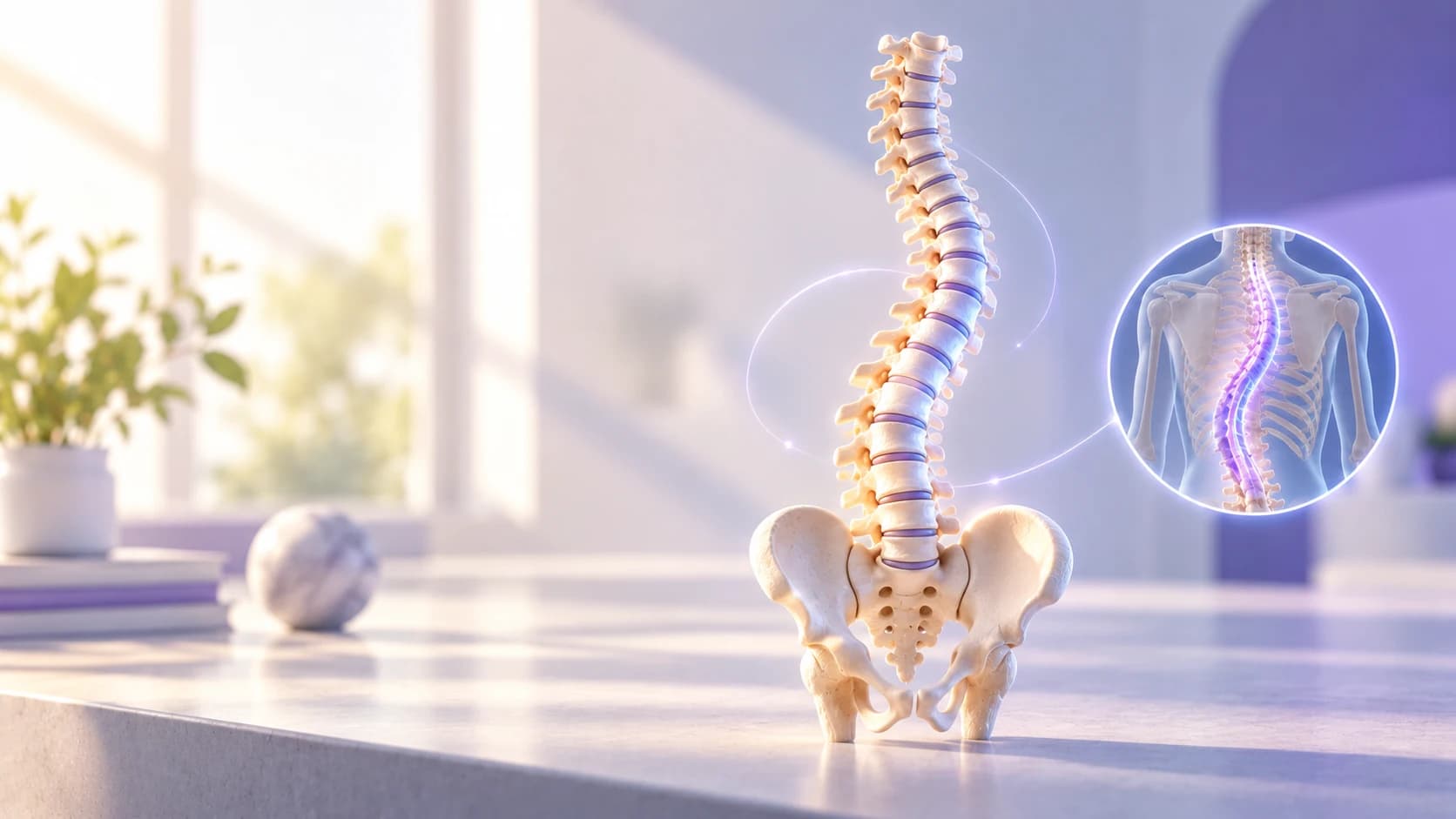
Scoliosis is a condition in which the spine develops an abnormal sideways curvature. It most commonly becomes noticeable during childhood or adolescence, particularly during periods of rapid growth.
The degree and pattern of curvature can vary significantly between children. Some cases are mild and may only require observation, while others may progress during growth and require active treatment.
Early assessment can help determine the severity of the curvature and whether ongoing monitoring or treatment is appropriate.
Recognising Scoliosis
Scoliosis may not cause pain, particularly in its early stages. Parents, teachers or healthcare professionals may notice changes in a child's posture or the appearance of the back.
Possible signs include:
- Uneven shoulders
- One shoulder blade appearing more prominent
- Uneven waist or hips
- The body appearing to lean to one side
- Clothes appearing to hang unevenly
- A visible curve in the spine
- One side of the back appearing higher when the child bends forward
These signs do not necessarily mean that a child has scoliosis. A medical assessment is needed to determine the cause.
How Is Scoliosis Diagnosed?
Assessment usually begins with a physical examination and review of the child's medical history and growth.
The specialist may assess the child's posture, spinal alignment and range of movement. Imaging, particularly X-rays, may be used to confirm the curvature and measure its severity.
The child's age, growth stage and degree of curvature are important when determining whether the condition is likely to progress.
What Causes Scoliosis?
There are different types of scoliosis.
In many children and adolescents, the exact cause is not known. This is commonly referred to as idiopathic scoliosis.
Scoliosis can also be associated with conditions affecting the development of the spine, neuromuscular conditions or, less commonly, other underlying causes.
The appropriate evaluation depends on the child's age, symptoms and clinical findings.
Treatment Options
Treatment depends largely on the severity of the spinal curvature, the child's age and how much growth remains.
For children with a mild curvature, the specialist may recommend observation and regular monitoring to determine whether the curve changes as the child grows.
For some children with a more significant or progressing curvature, bracing may be recommended to help control progression during growth.
In more severe cases, or when the curvature continues to progress despite other approaches, surgery may be considered.
The appropriate treatment should always be determined by a paediatric orthopaedic or spinal specialist following an individual assessment.
Growing With Scoliosis
Monitoring scoliosis during growth is important because spinal curvature can change as a child develops.
Follow-up may include regular clinical assessments and, where appropriate, imaging to monitor the curvature.
Parents may also be advised to watch for changes in posture, mobility, discomfort or other symptoms and discuss any concerns with the treating specialist.
When Should You Consider a Second Medical Opinion?
A second medical opinion can be particularly useful when a child has been advised to undergo significant treatment or surgery.
An independent paediatric orthopaedic or spinal specialist can review the child's medical records and imaging and provide another perspective on:
- The diagnosis
- Severity of the curvature
- Risk of progression
- Recommended treatment
- Bracing options
- Surgical recommendations
- Alternative treatment approaches
For families facing a complex treatment decision, an additional specialist perspective can provide greater clarity before proceeding.
Request a Second Medical OpinionExploring Specialist Treatment Internationally
For families considering treatment outside their home country, selecting an experienced paediatric orthopaedic or spinal centre is an important part of the process.
Bluedot Medical Assistance can coordinate medical documentation with appropriate hospitals and specialists, support specialist evaluations and help families understand available treatment pathways.
Where international treatment is appropriate, our team can also assist with the wider patient journey, including hospital coordination and international patient arrangements.
Explore International TreatmentFrequently Asked Questions
Can scoliosis in children get worse?
Some spinal curves can progress as a child grows. The likelihood depends on factors such as the degree of curvature, age and remaining growth.
Does scoliosis always require surgery?
No. Many children with scoliosis are managed through observation or other non-surgical approaches. Surgery is generally considered for selected cases with more significant or progressive curvature.
Does scoliosis cause pain?
Many children with scoliosis do not experience significant pain. However, pain or other symptoms should be assessed by a healthcare professional.
Can a child with scoliosis play sports?
Activity recommendations depend on the child's individual condition and treatment. Parents should discuss specific activities with the child's treating specialist.
Should we get a second opinion before scoliosis surgery?
Families may consider a second specialist opinion before major surgery to better understand the diagnosis, treatment recommendation and available options.