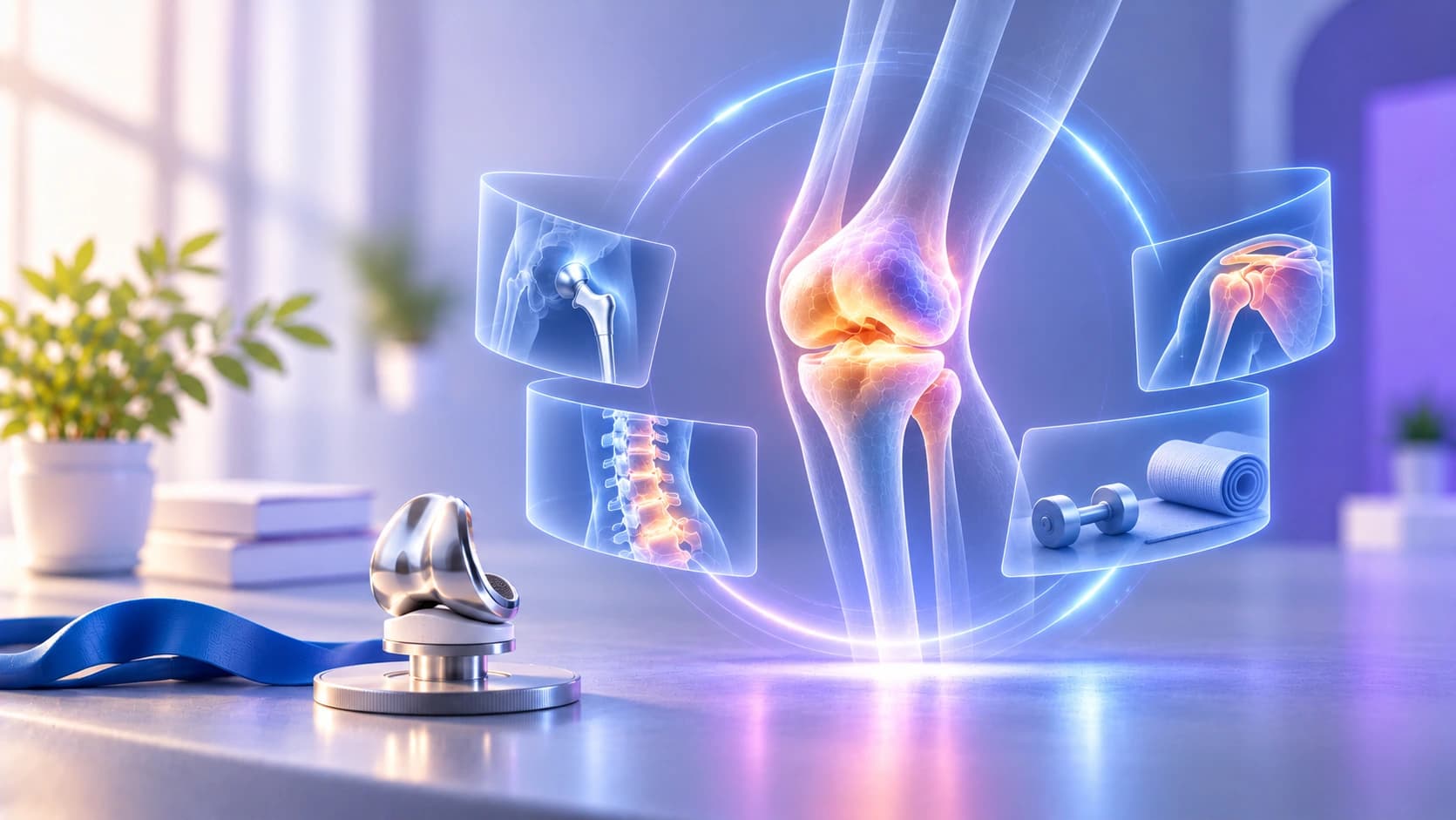
Understanding Orthopaedic Treatment & Procedures
Orthopaedic care focuses on conditions affecting the bones, joints, muscles, ligaments and spine.
Treatment can range from conservative management and rehabilitation to minimally invasive procedures and complex surgery.
Joint Replacement
Joint replacement may be considered when severe joint damage causes persistent pain and affects mobility or daily activities.
Common procedures include:
- Knee replacement
- Hip replacement
- Shoulder replacement
The decision to proceed with replacement surgery depends on the patient's symptoms, imaging, functional limitations and specialist assessment.
Spine Treatment
Spinal conditions can involve the bones, discs, nerves or other structures of the spine.
Treatment may include:
- Medication
- Physiotherapy
- Injections
- Minimally invasive procedures
- Spine surgery where appropriate
The recommended approach depends on the underlying condition and its severity.
Complex Orthopaedic Procedures
Some patients require specialised procedures for significant injuries, joint damage, deformities or complex musculoskeletal conditions.
Treatment planning depends on the patient's diagnosis, imaging, functional requirements and overall health.
Rehabilitation & Recovery
Rehabilitation can be an important part of orthopaedic treatment.
Depending on the procedure, recovery may involve:
- Physiotherapy
- Mobility exercises
- Strengthening
- Pain management
- Gradual return to normal activities
The rehabilitation plan should be tailored to the individual patient and procedure.
Questions to Discuss With Your Orthopaedic Specialist
Patients may wish to ask:
What is causing my symptoms?
What treatment options are available?
Important: Treatment decisions should be based on an individual assessment by a qualified orthopaedic specialist.