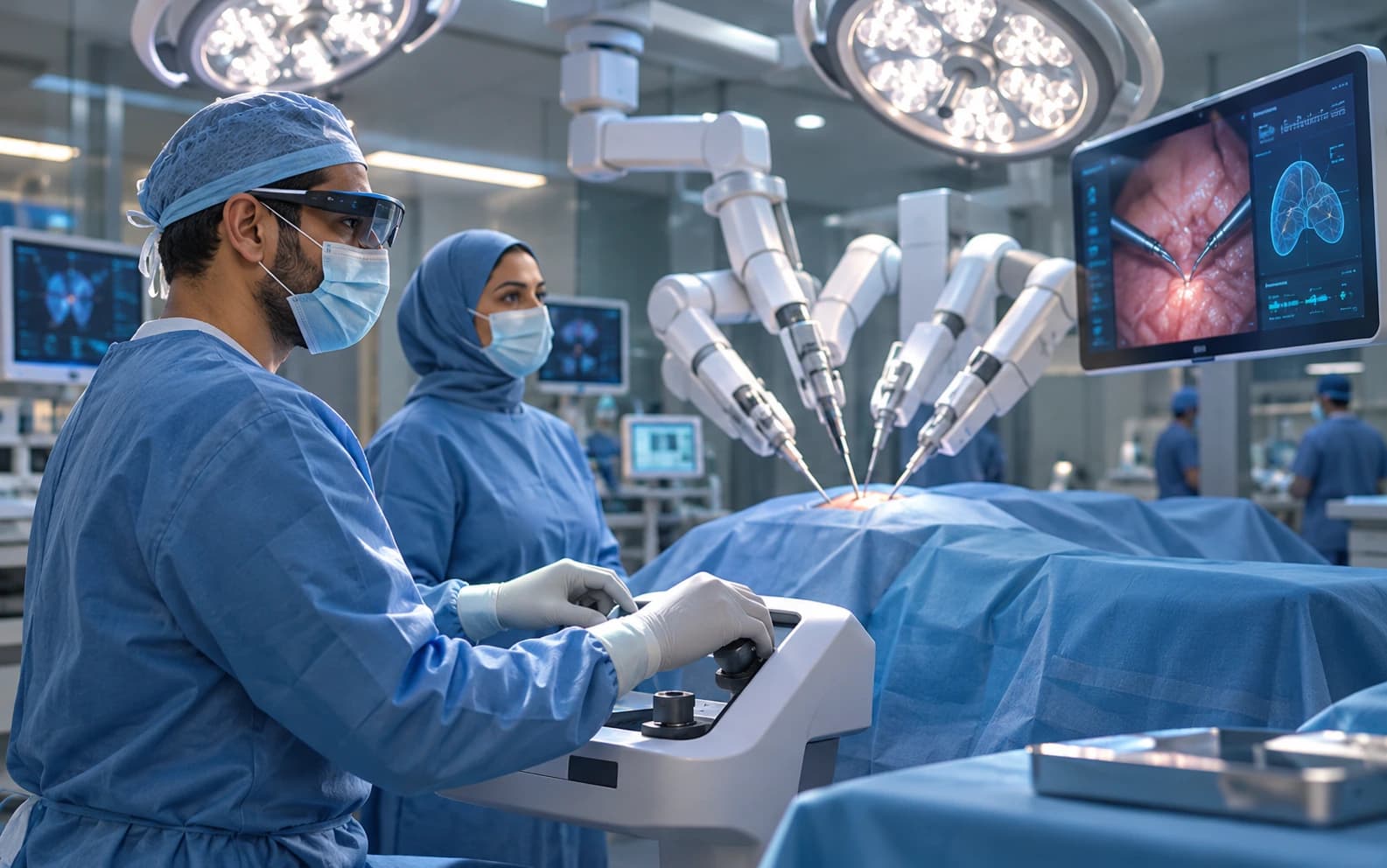
Surgery has traditionally required large incisions to give surgeons access to the area being treated. Minimally invasive techniques have changed this approach by allowing surgeons to operate through smaller openings using specialised instruments and cameras.
Robotic-assisted surgery takes this technology further. It allows a trained surgeon to control specialised instruments from a console while viewing the surgical area through a magnified, high-definition 3D system. The technology assists the surgeon with precision, flexibility and control; it does not perform the operation independently.
From Open Surgery to Smaller Access
Minimally invasive surgery is designed to reduce the physical disruption associated with conventional open surgery.
Depending on the procedure, surgeons may use laparoscopic or other minimally invasive techniques to access the treatment area through small incisions rather than one large surgical opening.
Potential advantages can include less postoperative pain, reduced blood loss, smaller scars, shorter hospital stays and faster recovery. These benefits vary according to the procedure and the individual patient.
What Robotic Surgery Adds
Robotic-assisted systems provide surgeons with enhanced visualisation and specialised instrument control.
The surgeon remains in control throughout the operation, using the robotic system to manipulate instruments positioned inside the patient's body. The system can provide a magnified three-dimensional view and allow precise movements in areas that may be difficult to access using conventional instruments.
This can be particularly useful for selected complex procedures where precision and access are important.
Where It Is Being Used
Robot-assisted and minimally invasive techniques are being used across an expanding range of surgical specialties.
Depending on the technology, hospital and surgeon, applications can include:
General and abdominal surgery
Colorectal surgery
Cardiac surgery
Gynaecological surgery
Urological surgery
Thoracic surgery
Head and neck surgery
Selected orthopaedic procedures
Spine surgery
The FDA notes that robotically assisted surgical systems have authorised uses across several surgical fields, while Mayo Clinic describes applications ranging from cardiac and abdominal surgery to urological, gynaecological and spine procedures.
Is Robotic Surgery Better?
Not necessarily.
Robotic surgery is a surgical approach, not automatically a superior treatment for every patient. Whether it offers an advantage depends on the condition, procedure, patient's health, surgeon's experience and available technology.
A surgeon may recommend robotic-assisted surgery, conventional minimally invasive surgery or open surgery depending on what is clinically appropriate.
Patients should discuss the alternatives, expected benefits, risks and the surgeon's experience with the particular procedure before making a decision.
The Importance of the Surgical Team
The technology itself is only one part of the procedure.
Robotic surgery requires appropriately trained surgeons and a trained operating-room team. The FDA specifically recommends that patients ask about the surgeon's training and experience with robotically assisted procedures.
The hospital's facilities, postoperative care, anaesthesia team and rehabilitation services also form part of the overall treatment pathway.
What Patients Should Consider
When discussing robotic or minimally invasive surgery with a specialist, useful questions include:
Is this approach appropriate for my condition?
How does it compare with open or conventional minimally invasive surgery?
What are the expected benefits and risks?
How experienced is the surgical team with this procedure?
What will recovery and hospitalisation involve?
These questions help patients understand the technology in the context of their individual treatment rather than choosing a procedure simply because it uses a newer technology.
Where Bluedot Fits
For patients considering treatment locally or internationally, understanding the available surgical approach is an important part of evaluating treatment options.
Bluedot Medical Assistance can coordinate medical documentation with appropriate hospitals and specialists within its network, allowing the receiving medical team to review the patient's case and determine the appropriate treatment pathway.
For international patients, this coordination can help establish whether a hospital has the relevant specialist capability and surgical facilities before travel arrangements are made.
Bluedot does not determine whether robotic or minimally invasive surgery is clinically appropriate. That decision remains with the qualified treating specialist.
The Future of Surgical Care
Robotic and minimally invasive technologies are continuing to evolve, with new applications being developed across different surgical specialties.
The most important development is not simply the presence of a robotic system. It is the combination of appropriate technology, experienced surgical teams, suitable patient selection and evidence-based clinical decision-making.
For the patient, the goal remains unchanged: selecting the safest and most appropriate treatment for their individual condition.